
The 2026 Turn in Automotive Interior Design: From Glass Stage to Intuitive Workspace
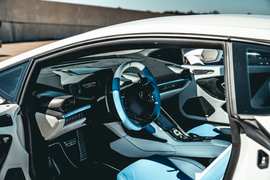
The way we interact with cars is undergoing a seismic shift. We are moving away from digital abstraction and rediscovering the profound importance of physical controls. As a veteran in the automotive industry with a decade of hands-on experience in vehicle development and user experience engineering, I have witnessed firsthand the evolution of the modern cockpit—from a hub of pure functionality to a glass-centric stage. However, the era of stripping down physical elements to their bare minimum is reaching its logical conclusion in 2026, as the industry grapples with a fundamental truth: human drivers need tangible feedback to feel secure and in control.
This transformation is not a regression; it is a maturation of design philosophy. The overwhelming shift toward digital interfaces over the last decade was driven by technological advancements, cost efficiencies, and the perception of progress. We saw large, high-resolution displays become the focal point of new vehicle architectures. Yet, this approach often overlooked the complex psychological and physiological needs of drivers operating heavy machinery at speed. By moving too far down the path of minimalism, manufacturers inadvertently created barriers to intuition, turning the driving experience into a constant test of cognitive attention rather than a seamless interaction. The industry is now recalibrating, seeking a balance that leverages digital power while prioritizing human physiology. This article will delve into the reasons behind this pivotal shift, explore the critical role of tactile feedback, and analyze the future of the automotive interior as a space where technology serves the driver, not the other way around.
The “Why” Behind the Glass Stage: When Minimalism Met Ideology
In the early to mid-2020s, the automotive industry witnessed a widespread embrace of what industry analysts and designers referred to as “digital-first” interiors. The logic behind this trend was multifaceted, driven by a confluence of technological capabilities, cost reduction strategies, and a burgeoning cult of minimalism. As vehicle manufacturing became more complex, manufacturers sought efficiencies in simplification. Each physical button, switch, and dial represented a point of potential failure, a cost in parts, tooling, and assembly. By consolidating these functions into a centralized, large touchscreen display, companies could reduce the number of mechanical components, streamline production lines, and offer a unified, futuristic-looking cockpit that conveyed a sense of sophistication and progress.
From a marketing and competitive standpoint, the large glass screen also served as a powerful visual differentiator. In an era where cars began to be perceived more as platforms for connectivity and digital experiences than as mechanical tools, the display became the primary interface for interaction. To the average consumer, a car with a sweeping, curved, all-glass dashboard seemed to be “further ahead” in technology than one with physical buttons. This perception of progress was a powerful driver of innovation, as manufacturers rushed to prove their digital competence and appeal to tech-savvy buyers who were accustomed to the swipe-and-tap interactions of their smartphones and tablets.
However, as these digital-first designs began to accumulate miles in the real world, manufacturers started encountering the unintended consequences of this approach. The issue wasn’t necessarily with the technology itself, but with its overapplication as the sole solution for driver interaction. The shift of primary functions, such as climate control, audio volume, and driving mode selection, to the touchscreen meant that drivers were often required to divert their visual attention from the road to navigate menus, swipe through sub-menus, or find icons. This created a cognitive load that, while seemingly minor in the context of a parking lot, became critically important on the highway, during heavy traffic, or in moments of unexpected urgency.
The underlying philosophical flaw was this: the industry mistook the familiarity of consumer electronics for the functional requirements of driving. A smartphone is used in a controlled, stable environment where the user is not actively operating a vehicle. When applied to a car, this logic created a dangerous disconnect between the driver’s intuitive expectations and the actual physical interface. I remember a case study from a vehicle audit in 2023 where a driver was stuck in heavy rain, trying to adjust the defroster. Instead of reaching for a familiar switch, she had to tap through three different screens and two layers of menus to find the ventilation control. By the time she managed to turn it on, she had missed a critical traffic merging opportunity, nearly causing an accident. This wasn’t an isolated incident; it was a symptomatic failure of a design approach that favored visual presentation over tactile functionality.
Ergonomics vs. Aesthetics: Reclaiming the Glance Second
The core of this evolving design philosophy lies in the concept of the “glance second”—the fleeting moment a driver’s eyes are diverted from the road to interact with the interior. A physical button, because of its tactile presence and fixed position, can often be operated by feel alone. Muscle memory allows drivers to find, press, or turn controls without looking, thus minimizing the time spent with their attention divided. A touchscreen, on the other hand, demands visual confirmation for every interaction. The finger must locate the correct icon, press it, and wait for the visual feedback from the display to ensure the command was received.
In everyday traffic, these extra moments may seem insignificant, but they add up. As traffic speed increases or weather conditions worsen, the need for rapid, intuitive interactions becomes paramount. This is where the discipline of ergonomics—the study of how people interact with their environment—reasserts its importance. A well-designed interior is one that minimizes cognitive load and allows drivers to focus on the task of driving. Over the past few years, the industry has realized that while large screens offer stunning visual appeal, they often introduce unnecessary complexity that hinders this primary function.

One of the most significant concerns in 2026 is the blurring of the hierarchy between information and control. With many manufacturers placing climate control, seat heating, music streaming, and driving modes on the same screen, drivers must navigate a complex digital landscape. This universal interface, while appearing “clean” from a design perspective, often results in confusion and hesitation. It requires drivers to mentally parse the interface before they can physically act. The subtle tension created by this mental effort is often dismissed as a minor inconvenience, but I have seen it erode trust and reduce the sense of security that drivers need from their vehicles.
Consider the shift in consumer expectations. Initially, the novelty of a large glass screen generated a “wow factor,” making the car feel futuristic and sophisticated. However, as this technology became commonplace, the initial fascination gave way to habituation. Drivers began to realize that what looked good in press photos did not always translate to practical use. They found that they frequently used certain functions—such as temperature or volume—and did not want to search for them in a menu. They appreciated the ability to make quick, precise adjustments without looking. This has led to a broader industry realization that while technology is essential for modern vehicles, it should be integrated seamlessly into the experience rather than dominating it.
2026: A Turning Point in Automotive Interiors
The year 2026 marks a pivotal moment in the ongoing evolution of automotive interior design. This shift is not a rejection of digital technology, but rather a reevaluation of how it is best applied to serve the driver. What we are witnessing is not a revolution, but a course correction driven by user experience data, consumer feedback, and a renewed focus on safety and ergonomics.
A growing number of manufacturers are beginning to reintegrate tactile controls for functions that are critical for driver comfort and safety. Climate controls are regaining their dedicated buttons, volume knobs are reappearing on center consoles, and driving mode selectors are becoming dedicated physical switches. This development is not about nostalgia or a return to the automotive past. It is a conscious decision based on the understanding that physical interaction is often superior for these specific tasks.
This evolution is a clear sign that the automotive industry is maturing. Technology often follows a predictable cycle: enthusiasm, over-exaggeration, and then correction. In the enthusiasm phase, new capabilities are pushed to their limits. During the exaggeration phase, these capabilities can become ideological, as designers and engineers prioritize style or a particular technological vision over practical usability. It is only during the correction phase that a balance is achieved, where technology is leveraged for its benefits while acknowledging its limitations and integrating it with other user experience principles.
The touch-only era of interiors was a form of this exaggeration. It was not a failure because it was technically flawed, but because it was functionally one-sided. There was a desire to demonstrate technological advancement, and in the process, the primary function of the car—driving—was sometimes put at risk. At the same time, customer expectations have also evolved. What once seemed futuristic now feels cumbersome. This has driven manufacturers to re-prioritize functions. What is security-critical? What is used regularly? What needs to be intuitive? What can be placed on a digital level? This differentiation marks the difference between a mere design trend and a fundamental shift in user philosophy.
One example of this change is the evolution of infotainment systems. Manufacturers are now realizing that while a large screen is excellent for displaying complex information like maps or media streaming, it should not be the only interface. The most successful current iterations pair large displays with tactile physical controls for commonly used functions. This approach allows drivers to benefit from the visual richness of digital technology while retaining the intuitive feedback of physical controls.
Another critical factor shaping this turn is the development of advanced assistance systems. As these systems become more complex, they require sophisticated interfaces that allow drivers to monitor and control them effectively. At the same time, the increasing complexity of these systems makes it even more important to minimize the cognitive load of other interactions. By placing climate controls and volume on dedicated buttons, manufacturers free up the driver’s attention to focus on navigating the details of their assistance systems.

The shift toward physical controls is also a strategic response to safety regulations and consumer demand for better driver support. As cars