swipe tap search all while driving that was never modern it was unnecessarily complicated in 2026 the tablet dashboard will be transformed back into a car interior that actually works
enough with the swiping why cars need real controls again
there are moments in a car that determine how a vehicle really feels not the first look at the exterior not the horsepower number in the brochure not even the fuel consumption on the data sheet but rather that small unassuming moment when you intuitively reach for a control knob while driving and suddenly realize it’s no longer there
instead glass
a smooth surface with menus hidden behind it submenus swipe gestures symbols that look like buttons but aren’t and as the traffic outside gets heavier as the speed increases or the rain falls harder your gaze no longer instinctively returns to the road but lingers on the display for a moment too long
this is where the real discussion about modern car interiors begins not at design awards not at trade show premieres but in everyday life
large touchscreens progress or minimalism
in recent years the cockpit has become a digital statement large touchscreens were seen as progress as a sign of technological superiority as visible proof that a vehicle has entered the present the larger the display the more modern the car appeared the fewer physical buttons the cleaner the design reduction was equated with quality minimalism with premium
but design doesn’t automatically mean ergonomics and modernity doesn’t automatically mean improvement
what looks futuristic in press photos can feel surprisingly cumbersome in everyday use a vehicle is not a living room not a smartphone not a tablet that you comfortably hold in your hand it is a complex system that is operated while in motion at speed under distraction under time pressure every interaction takes place in an environment that demands attention
and that’s exactly why the question of operation is not a matter of taste it is a fundamental functional decision
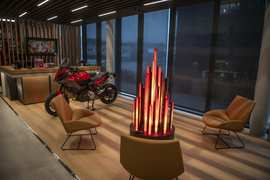
the complete shift of central functions to touchscreens was never just an aesthetic development it was an expression of an era that equated digital surfaces with progress software replaced mechanics glass replaced tactile feedback interface replaced intuition the cockpit became a stage for technology and less a tool for the driver
of course large displays had their justification navigation camera systems connectivity customization all of these benefit from digital solutions no one is demanding a return to a time of monochrome displays and overloaded switch landscapes but the radical reduction of physical controls was extreme and extremes are rarely permanently sensible in automobiles
because driving a car is not a static experience it’s dynamic situational sometimes hectic sometimes relaxed and it is in these moments that it becomes clear whether an operational concept is well thought out or just well staged
the discussion reaching its turning point in 2026 is therefore not a nostalgic reflection that everything was better in the past it is the result of a maturation phase a realization that technology is strongest when it supports people not when it occupies them
it’s not about getting rid of displays it’s about redefining their role because an interior can impress but above all it must function
swipe tap search – all while driving. That was never “modern,” it was unnecessarily complicated. In 2026, the tablet dashboard will be transformed back into a car interior that actually works.
Enough with the Swiping: Why Cars Need Real Controls Again
There are moments in a car that determine how a vehicle really feels. Not the first look at the exterior. Not the horsepower number in the brochure. Not even the fuel consumption on the data sheet. But rather that small, unassuming moment when you intuitively reach for a control knob while driving—and suddenly realize it’s no longer there.
Instead: Glass.
A smooth surface, with menus hidden behind it. Submenus. Swipe gestures. Symbols that look like buttons but aren’t. And as the traffic outside gets heavier, as the speed increases or the rain falls harder, your gaze no longer instinctively returns to the road—but lingers on the display for a moment too long.
This is where the real discussion about modern car interiors begins. Not at design awards. Not at trade show premieres. But in everyday life.
Large Touchscreens: Progress or Minimalism?
In recent years, the cockpit has become a digital statement. Large touchscreens were seen as progress, as a sign of technological superiority, as visible proof that a vehicle has entered the present. The larger the display, the more modern the car appeared. The fewer physical buttons, the “cleaner” the design. Reduction was equated with quality, minimalism with premium.
But design doesn’t automatically mean ergonomics. And modernity doesn’t automatically mean improvement.
What looks futuristic in press photos can feel surprisingly cumbersome in everyday use. A vehicle is not a living room. Not a smartphone. Not a tablet that you comfortably hold in your hand. It is a complex system that is operated while in motion—at speed, under distraction, under time pressure. Every interaction takes place in an environment that demands attention.
And that’s exactly why the question of operation is not a matter of taste. It is a fundamental functional decision.
The complete shift of central functions to touchscreens was never just an aesthetic development. It was an expression of an era that equated digital surfaces with progress. Software replaced mechanics. Glass replaced tactile feedback. Interface replaced intuition. The cockpit became a stage for technology—and less a tool for the driver.
Of course, large displays had their justification. Navigation, camera systems, connectivity, customization—all of these benefit from digital solutions. No one is demanding a return to a time of monochrome displays and overloaded switch landscapes. But the radical reduction of physical controls was extreme. And extremes are rarely permanently sensible in automobiles.
Because driving a car is not a static experience. It’s dynamic. Situational. Sometimes hectic. Sometimes relaxed. And it is in these moments that it becomes clear whether an operational concept is well thought out—or just well staged.
The discussion reaching its turning point in 2026 is therefore not a nostalgic reflection that “everything was better in the past.” It is the result of a maturation phase. A realization that technology is strongest when it supports people—not when it occupies them.
It’s not about getting rid of displays. It’s about redefining their role. Because an interior can impress. But above all, it must function.
Why the Industry Still Relied on Glass
The shift towards touchscreen cockpits was not an accident. It wasn’t a collective mistake either. It was a logical conclusion drawn from several trends that had been developing over years.
Firstly, there was the technological advancement itself. Displays became cheaper, larger, and higher in resolution. Processors became more powerful. Software platforms more flexible. What was once technically demanding could suddenly be centrally controlled via a digital interface. A single screen could gather functions that previously required numerous individual switches, cables, and control devices.
For manufacturers, this meant fewer mechanical parts, less variation in production, and more scalability. Software can be updated. Hardware cannot. A new feature doesn’t require a new tool, just an update. From an industrial perspective, centralization was logical—and economically appealing.
Then, there was the external effect. In an era where technology is increasingly seen as a status symbol, the large display became a visible proof of progress. Anyone stepping into a car and seeing a broad glass surface in front of them felt like they had arrived in the future. The cockpit became a business card for digital competence.
The automotive industry was not only following its course but also taking cues from the world of consumer electronics. Smartphones showed how dramatically user interface concepts could change. Tablets proved that physical buttons aren’t necessary if the software is well designed. The idea of transferring this logic to vehicles was a logical step.
Yet, this is where the flaw in thinking began.
A smartphone is used in a static environment. A car is not. A tablet demands attention—a vehicle does too. And two things that both demand attention inevitably end up competing with each other.
The transition from a functional cockpit to a digital interface was thus not only a technical step but also a cultural one. The car began to be viewed more as a platform—less as a mechanical tool. Connectivity, apps, personalization, streaming, and digital services: All became more important.
This evolution put a central characteristic of the automobile in the background: It moves. And it is operated while moving.
That this development would be questioned at some point was almost inevitable. Not because displays were bad. But because they were overused as the sole solution.
Ergonomics, Attention, and the Underrated Glance Second
The true weakness of pure touch concepts isn’t revealed in a parking lot. It shows itself on the highway, in city traffic, in moments where decisions need to be made quickly.
A physical button has a crucial attribute: It can be felt. Its position is constant. Its resistance is tangible. The driver can operate it without taking their eyes off the road. Muscle memory takes over. The interaction becomes a habit.
A touchscreen operates differently. Every input is visually controlled. The finger searches for the right area. The feedback comes from graphics—not from touch. Even if the interface is well-designed, the operation remains more dependent on sight than with a physical element.
It’s not about seconds in a dramatic sense. It’s about glance seconds. About minimal distractions that add up. A brief search in the menu. A second glance to see if the command was registered. A second attempt because the area wasn’t hit precisely.
These moments seem trivial. Yet, while driving, they are relevant.
Ergonomics is therefore not a nostalgic concept, but a discipline relevant to safety. It determines how intuitively a system can be operated. How quickly information can be interpreted. How much cognitive load increases.
A well-designed interior reduces mental effort. It doesn’t require interpretation. It leaves functions where you expect them. And it clearly separates information and control.
This separation has been increasingly blurred over the past years. Everything moved to the