
Swipe, tap, search – all while navigating the rush of the commute. This isn’t modern; it’s an unnecessary complication that drivers have finally begun to reject. In 2026, the automotive interior is undergoing a radical transformation, moving away from the dominant touchscreen paradigm to reclaim a physical connection that drivers genuinely miss.
The fundamental truth of driving isn’t about the first impression, the horsepower figure, or the fuel efficiency data sheet. It’s about the simple, intuitive moment when you reach for a control knob to adjust the climate—and realize it’s gone. Instead of the reassuring solidity of a physical button, drivers are confronted with the cold expanse of glass. This shift has sparked a critical re-evaluation of what constitutes a genuinely functional and user-friendly automotive experience.
The Era of Glass: Progress or Minimalism?
For years, the automotive cockpit has been defined by a digital aesthetic. Large touchscreens were touted as the pinnacle of progress, symbolizing technological sophistication and a clear leap into the future. The prevailing logic suggested that a larger display equated to a more modern vehicle, and that the absence of physical controls signified superior design. This era championed minimalism and reduction as proxies for quality and premium luxury.
However, the industry is learning a critical lesson: design does not inherently equate to ergonomics, and modernity does not automatically mean improvement. What appears futuristic in promotional materials often feels cumbersome in everyday use. A car is not a static environment like a living room or a smartphone; it is a dynamic, mobile workspace demanding the driver’s constant attention. Operating a vehicle involves navigating complex environments at varying speeds, under distracting conditions, and under time pressure. Every interaction occurs where attention is paramount.
This is why the question of user interface is not merely a matter of aesthetic preference; it is a fundamental functional decision.
The pervasive shift to touchscreen interfaces was never solely an aesthetic trend. It represented an ideological phase that equated digital surfaces with progress. Software began to supplant mechanics, glass replaced tactile feedback, and interfaces started dictating intuition rather than supporting it. The cockpit evolved into a stage for technology, rather than remaining a functional tool for the driver.
While large displays have undeniably brought advantages—facilitating navigation, camera systems, connectivity, and personalization—the radical reduction of physical controls went too far. Extremes are rarely sustainable in automotive design. Driving is not a static experience; it is dynamic, situational, and sometimes stressful. It is in these moments that the true success of an operational concept becomes apparent—whether it is genuinely well-thought-out or merely well-marketed.
The critical re-evaluation occurring in 2026 is not a nostalgic yearning for the past. Instead, it is the result of a maturation phase, a realization that technology serves best when it supports the driver, rather than distracting them. The focus is shifting from minimizing the driver’s interaction to optimizing it. The industry is no longer demanding the elimination of displays but rather redefining their role. While a car’s interior must impress, its primary function is to work seamlessly.

Why the Industry Clung to Glass
The widespread adoption of touchscreen cockpits was not an oversight or a collective mistake. It was the logical conclusion of several overlapping industry trends.
First and foremost was the rapid technological advancement. Displays became larger, cheaper, and higher resolution. Processors became more powerful, and software platforms grew more flexible. Tasks that once required numerous individual switches, cables, and control units could now be centrally managed via a digital interface. For manufacturers, this meant fewer mechanical parts, reduced production variation, and greater scalability. Software can be updated; hardware cannot. A new feature does not require retooling; it simply requires a code update. From an industrial standpoint, centralization was both logical and economically advantageous.
Second, the shift was driven by external perception and the consumer electronics influence. In an era where technology is increasingly viewed as a status symbol, large displays became tangible proof of progress. Customers stepping into a vehicle with a broad glass surface felt they had arrived in the future. The cockpit became a statement of digital prowess.
The automotive industry was not only charting its own course but also closely following the lead of consumer electronics manufacturers. The smartphone revolution demonstrated how dramatically user interface concepts could change. Tablets proved that physical buttons were unnecessary if the software was designed properly. Transferring this logic to vehicles seemed like the next logical step.
However, this is where the foundational flaw in the thinking began.
A smartphone is used in a static, controlled environment. A car is not. A tablet demands attention—and so does a vehicle. When two entities both demand attention, they invariably end up competing with each other.
The transition from a functional cockpit to a digital interface was thus not just a technical step but also a cultural one. The car began to be viewed more as a platform than a mechanical tool. Connectivity, apps, personalization, streaming, and digital services became central to the vehicle’s appeal.
This evolution inadvertently pushed a fundamental characteristic of the automobile into the background: it moves. And it is operated while in motion.
It was almost inevitable that this direction would eventually be questioned—not because displays are inherently flawed, but because they were overused as the exclusive solution.
Ergonomics, Attention, and the Underrated Glance Second
The true weakness of pure touch concepts is not revealed in a parking lot. It manifests on the highway, in heavy city traffic, and in moments requiring split-second decisions.
A physical button possesses a crucial attribute: tactile feedback. Its position is fixed, and its resistance is tangible. The driver can operate it without taking their eyes off the road; muscle memory takes over, and the interaction becomes instinctual.
A touchscreen operates differently. Every input requires visual confirmation. The finger must locate the correct area, and the feedback comes from the display—not from touch. Even with a well-designed interface, the operation relies more heavily on sight than with a physical control.
It’s not about dramatic time savings. It’s about the glance seconds. Minimal distractions that accumulate over the course of a drive. A brief search through menus, a second glance to verify command registration, or a second attempt because the target wasn’t hit precisely.
These micro-interactions may seem insignificant in isolation, but while driving, they are highly relevant.
Ergonomics, therefore, is not a nostalgic relic; it is a safety-critical discipline. It determines how intuitively a system can be operated, how quickly information can be interpreted, and how much cognitive load increases.
A well-designed interior reduces mental effort. It doesn’t require interpretation. It keeps functions where the driver expects them and clearly separates information from controls.
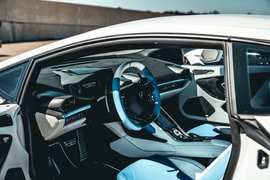
This separation has been increasingly blurred in recent years. All functions—climate control, navigation, seat heating, music streaming, and driving modes—are consolidated onto the same screen. The interface has become universal, but also complex.
The result was not a catastrophic failure. It was more subtle: a pervasive feeling that the system demands more attention than is actually necessary.
This feeling is precisely what marks the turning point in 2026.
2026: The Turning Point Is Not a Revolution, but a Correction
What we are witnessing in 2026 is not a radical upheaval. It is not a dramatic rejection of the digital age. It is a quiet, yet clear, course correction.
Increasingly, manufacturers are beginning to restore physical access to central functions. Climate controls are regaining dedicated switches, volume knobs are reappearing, and driving modes are receiving dedicated buttons. These are not retro elements or stylistic echoes of the past. They are conscious ergonomic decisions.
This development is not a retreat from digitization. It is digitization maturing.
Technology often follows a similar cycle: enthusiasm, over-exaggeration, and correction. In the initial enthusiasm, new technologies are pushed to their limits. In the exaggeration phase, they become ideological. Only in the correction phase does balance emerge.
The touchscreen-only era was such an exaggeration. Not because it technically failed, but because it was functionally one-sided. The industry was eager to demonstrate its capabilities, sometimes forgetting what truly makes sense.
Simultaneously, customer expectations have evolved. Initially, the wow factor was paramount. The large display impressed, and the minimalist interface felt futuristic. But over time, fascination gave way to familiarity. With that familiarity came the question: Does this feel better?
Many drivers discovered they use certain functions more often than anticipated. They no longer want to search while driving. They appreciate direct, tactile feedback. They want operation that ideally happens unconsciously.
This is where the new focus lies: not less technology, but better integration.
Therefore, 2026 does not signal a return to overloaded switch panels. It signals new prioritization. What functions are security-critical? What is used regularly? What must be intuitively accessible? And what can consciously remain on a digital level?
This differentiation is the key distinction between a design trend and a user philosophy.
The Future of Interiors: Technology Without Ideology
The interior of the future will remain digital. There is no doubt about that. Displays will become larger, sharper, and more connected. Voice control will become more intelligent, and assistance systems more complex. Vehicles will increasingly function as rolling computers.
Yet, the industry is increasingly understanding that technology is not an end in itself.
A good operating concept acknowledges that people are not perfect users. They get distracted. They get tired. They get stressed. They do not always act rationally. Precisely for this reason, a vehicle must simplify operation—not complicate it.

The intelligent combination of digital and physical elements will become the new premium standard. Large screens will handle complex information display, connectivity, and personalization. Physical controls will manage climate control, volume, and driving modes.