
Powering Real Life: When a Car’s Engine Matters—and When It Doesn’t
In the landscape of automotive consumerism, the concept of “power” is often presented with a near-mythic grandeur. Buyers are inundated with performance metrics—horsepower ratings that promise exhilaration, torque curves that suggest torque that will leave others eating dust, and 0-60 MPH times that imply the driver has a rocket strapped to their backside. But for those of us who spend our lives not on a racetrack, but on the asphalt arteries of America’s cities, suburbs, and highways, this relentless focus on performance often feels detached from reality. I’ve been guiding clients through the complex decisions of car ownership for over a decade, and I can tell you that while a 300-horsepower engine might make for a stunning press release, in the daily commute, it often goes utterly unremarked. So, the question isn’t about what a car is capable of in a laboratory; it’s about what that power translates to when navigating the gridlock of the Los Angeles commute or merging onto a busy highway in Atlanta.
To understand the true relevance of engine power, one must step back and observe the most common scenarios that drivers face. Most of us spend our time waiting in traffic, sitting behind slowly moving vehicles, or patiently inching our way into open lanes. When you look at your car insurance cost or your car payment (factors that significantly impact your budget), these are often driven by higher-powered, sportier vehicles. But what happens when you actually need that power? What happens when you need to overtake a slow-moving truck on a winding road in the Ozarks or merge onto the I-85 at rush hour? These aren’t scenarios requiring a 90-horsepower engine, and they aren’t scenarios needing a 300-horsepower engine either. They require something in the middle, a car that can react quickly but smoothly, providing confidence without being aggressive.
Why the 0-60 Sprint is an Everyday Illusion
Decades ago, auto enthusiasts might have obsessed over 0-60 MPH times, but for the modern driver, this metric is largely irrelevant in daily life. The 2026 automotive market offers an array of vehicles with engines ranging from small, efficient turbines to monstrous V8s, but most buyers don’t truly need the extremes. Whether you choose a 2026 Hyundai Sonata Hybrid or a 2026 Ford Mustang GT, the difference in your day-to-day driving experience will likely be minimal unless you’re intentionally seeking it out.

The most common road scenario is not a launch from a standstill, but an overtake from a moderate speed. This is why engine performance should be measured by the car’s ability to accelerate from 60 to 100 km/h, not by a standing-start sprint. It’s this reaction speed that dictates whether a maneuver feels safe and controlled or hesitant and risky. And this is where the difference between 90 and 300 horsepower is most starkly apparent.
90 HP: Calm Confidence Through Calculated Control
While a 90-horsepower engine might not excite the soul, it demands a calm, focused approach from the driver. Overtaking must be planned rather than impulsive, and acceleration should be deliberate, not reactive. For the driver, this creates a sense of control and focus; there’s no pressure to hurry or keep up with the pack.
In everyday driving conditions, a car with 90 horsepower isn’t slow, nor is it fast. It demands attention without requiring effort. Many drivers find this surprisingly relaxing, as there’s no constant reminder of the car’s capabilities. This vehicle is ideal for those who value stability, predictability, and a straightforward driving experience. For them, power is a functional necessity, not an aspiration.
There are some moments, however, when this engine shows its limitations. On a short highway ramp with a full car, or when attempting to pass a slow-moving farm vehicle on a rural road, the lack of reserve power becomes evident. It’s not about having fun anymore; it’s about safety and time. While these situations are rare, they can turn a pleasant drive into a high-stakes decision.
Cars under 150 HP in Comparison
300 HP: Power as a Safety Net
A 300-horsepower engine fundamentally changes the driver’s relationship with the road. It’s not that the driver is constantly pushing the limits, but rather that they feel capable of doing so should the need arise. The gap between 60 and 100 km/h disappears, and overtaking becomes a matter of intent, not effort.
In everyday life, this translates to less planning and more flexibility. The feeling of confidence is enhanced, even with a car fully loaded with luggage and passengers. This power reserve can feel comforting, but it can also be a source of temptation. The downside is undeniable: higher consumption, greater weight, and a reluctance to use the power for what it was designed for. The 2026 Nissan Maxima offers this kind of power, but is it worth the extra cost in fuel and maintenance? Many drivers find that the financial benefits of a more efficient engine outweigh the occasional need for that extra push.
Sporty Models with Over 250 HP
The Real Difference: Control vs. Power
In heavy traffic, on winding roads, and under changing conditions, the distinction between engines is not about weakness versus strength, but tension versus relaxation. One car demands attention; the other relieves it. One works best when you anticipate traffic; the other works even when you’re tired. These are two fundamentally different ways of experiencing the road.
Two Ways to Experience Everyday Life
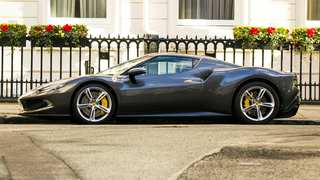
Some drivers want a car that is reliable, predictable, and unobtrusive. For them, power is a necessity, but not a constant presence. Others want a car that offers reserves, feels confident, and always seems superior. For them, power is not a number but a sense of security and a statement of identity. Both approaches are legitimate, and both lead to different decisions.
The Honest Question Before Buying
When it comes to automotive financing, making a decision based on emotion often leads to regret. Many buyers choose a car based on the horsepower rating rather than their actual needs. But if you ask yourself when you were last upset by too little power, or when you were bothered by too much effort, you’ll quickly find the answer. Those who answer this question honestly will know whether 90 horsepower is sufficient or if 300 horsepower provides peace of mind.
Conclusion
Neither 90 horsepower nor 300 horsepower is objectively better or worse. They simply represent different expectations for daily life. One car fits a life that needs to function efficiently; the other fits a life that wants to feel effortless and commanding. That’s why there’s no objective winner—only the car that matches your personal driving style and your personal car insurance cost.
The Illusion of Power: What 90 HP vs. 300 HP Actually Means on America’s Roads
In the cacophony of the 2026 automotive market, the word “horsepower” is often deployed as a rhetorical weapon, aimed squarely at the heart of buyer aspiration. We are a culture driven by aspiration, by the desire to feel in control, capable, and ahead of the curve. The 90-horsepower engine is frequently derided as underpowered, inadequate, and a symbol of compromise. The 300-horsepower engine is lauded as the pinnacle of performance, the hallmark of freedom, and the engine that gives you the edge.
But as a certified financial advisor specializing in automotive investment and cost optimization, I can tell you that the most common driver—the one navigating the morning commute on the I-10, the one grocery shopping at Trader Joe’s in San Francisco, the one driving the kids to school in a suburb of Atlanta—lives in a reality where these extremes often represent more myth than utility.
The question isn’t about what a car can do; it’s about what a driver needs it to do. We live in a world where car prices are at historic highs, car loans are stretching over longer terms, and car insurance costs are rising annually. Before you add a sportier engine to your car loan, or find yourself paying more for your personal car insurance, you must ask: does this car fit the life I actually live, or the one I read about in magazines?
The Misguided Metric: Why 0–60 Time is an Everyday Myth
For decades, 0-60 MPH times have been the gold standard of automotive performance. Car journalists and enthusiasts alike treat this metric as objective, measurable, and comparable. And on a race track, it is. But on America’s highways and byways, it has become a misleading metric. The reality is that most driving scenarios do not begin from a dead stop.
Instead, we find ourselves merging onto highways, overtaking trucks on country roads, or pulling out from side streets where the speed of the oncoming traffic is the deciding factor. What matters most in these moments is not the initial sprint, but the car’s ability to accelerate from a moderate speed—typically around 60 to 100 km/h. This is where you feel the difference between a car that is merely adequate and one that is truly confident.
The 2026 Market: Efficiency vs. Exuberance

The 2026 automotive market offers a dizzying array of options, from electric vehicles (EVs) like the Tesla