
Power vs. Performance: What Horsepower Do You Really Need in 2026?
As an industry veteran with a decade spent navigating the complex intersection of automotive engineering and consumer psychology, I can tell you that the pursuit of horsepower has evolved. Once the primary metric for excitement and capability, power is now a secondary concern for many drivers. In 2026, the question isn’t just about raw output; it’s about how power serves your lifestyle, your financial goals, and your peace of mind.
We often hear claims like, “90 horsepower sounds like a compromise,” or “300 horsepower feels like freedom.” But between these two extremes lies the everyday reality of driving. And everyday reality doesn’t strictly follow the rules of automotive brochures or barroom debates. The key question is not what a car can theoretically do, but when and where power is actually needed.
This isn’t just about feel-good marketing; it’s about understanding the economics of driving. Power has a direct correlation with efficiency, maintenance costs, and insurance premiums. Let me explain why the classic horsepower benchmarks might not align with what you actually need in 2026.
Why the 0-100 Time Barely Matters in Everyday Life
Many purchasing decisions are still based on one number: the acceleration from 0 to 100 km/h (0–62 mph). It sounds objective, measurable, and comparable. However, in real road traffic, it hardly matters. Because most everyday situations don’t start from zero.
More often, it’s about overtaking a truck on a country road, merging onto the highway, or quickly accelerating from medium speeds. So what’s crucial is not the sprint from a standstill but how quickly a car reacts from around 60 to 100 km/h. It is in these moments that you can feel whether an overtaking maneuver feels confident or sluggish.
And it is here that 90 and 300 horsepower really begin to make a difference.
The Economics of Acceleration
Why does the 0-100 benchmark fail to capture real-world needs?
In a typical driving scenario, you are rarely starting from a dead stop. You might be accelerating from a light, merging into traffic, or passing another vehicle. These maneuvers require mid-range responsiveness, not a massive burst of power from zero.
Consider the financial implications of this:

High-Powered Cars (300+ HP): These vehicles are often equipped with larger, more complex engines designed for maximum output. This results in higher fuel consumption, more expensive maintenance, and increased insurance premiums. If you are commuting in heavy traffic and rarely utilize the engine’s full potential, you are paying for power you never use.
Low-Powered Cars (90 HP): While they might lack the “thrill” factor, these vehicles prioritize efficiency. They are significantly cheaper to insure, maintain, and fuel. In a market where consumers are increasingly conscious of their monthly expenses, the economy of a lower-powered car becomes a compelling advantage.
90 HP: When Power Doesn’t Impress, but Works
A car with around 90 HP doesn’t demand restraint, but clarity. It requires planning instead of reflex, and rewards with calmness. In everyday life, this means: Acceleration happens in a controlled manner, not impulsively. Overtaking is consciously planned. The driver stays mentally engaged, rather than just following along.
In typical daily driving conditions, such a vehicle is not slow, but neither is it generous. It demands attention, but not effort. For many people, this creates a surprising effect: Driving feels relaxing because there’s no pressure to rush.
Case Study: The Commuter’s Choice
Consider the case of Sarah, a 28-year-old marketing professional living in Austin, Texas. She commutes 30 miles each way in dense city traffic.
Scenario:
Original Car: 200-horsepower sedan.
Reason for Selling: Constant anxiety about fuel efficiency, high insurance premiums, and the nagging feeling that she was paying for “power” she didn’t use.
New Car: 92-horsepower compact city car.
Outcome:
Sarah didn’t just save money; she found peace of mind. Her insurance premiums dropped by 30%, and she estimated she was saving $80 per month on gas alone. More importantly, the smaller, nimbler car allowed her to navigate tight city streets with ease, reducing her daily driving stress.
Financial Strategies for 2026
What This Means for You: If you are primarily using your car for commuting, errands, and local travel, a lower-powered vehicle might be the smartest financial decision. Instead of paying for horsepower, invest in fuel efficiency and lower maintenance costs.
Cost Breakdown:
Insurance: Lower horsepower generally means lower risk, translating to lower premiums.
Fuel: Smaller engines consume less fuel, providing significant savings over the lifetime of the car.
Depreciation: Efficient, reliable cars often hold their value better than high-powered models that are subject to more wear and tear.
When Insufficient Power Suddenly Becomes Relevant
There are situations where power is more than comfort. It becomes a time reserve. When driving onto a short highway ramp with a full load or having a narrow time window to overtake on a country road, you quickly realize: An engine that adds power reluctantly extends those critical moments.
Not out of drama, but physics. In such situations, there’s no feeling of lack, but of dependency: You wait longer for something to happen. And this is where some start to wish for more power, not out of emotion, but the need for room to maneuver.
Cars Under 150 HP in Comparison
While 90 horsepower is sufficient for many, vehicles in the 120–150 HP range offer a good balance of performance and efficiency. These cars are ideal for drivers who need a bit more passing power but don’t want to sacrifice fuel economy.
Key Features to Look For:
Torque: Torque is the rotational force of the engine. While horsepower measures peak output, torque is often more important for pulling power and acceleration at lower speeds.
Turbocharging: A small turbocharged engine can provide the low-end torque of a larger engine without the fuel consumption penalties of a larger displacement.
Should You Buy, Wait, or Rent/Invest?
Decision Point: If you frequently drive in situations that require more power than a low-horsepower car can provide, you need to evaluate your options.
Buy Higher Horsepower: If your needs dictate more power, be prepared to pay a premium in fuel, maintenance, and insurance.
Rent/Subscribe: If you only need occasional extra power for long trips or moving, consider a rental or subscription service. This allows you to access power without the commitment of ownership.
Wait: If your financial situation is tight, it might be best to wait and save for a more suitable vehicle.
300 HP: Power as a Reserve, Not a Constant State
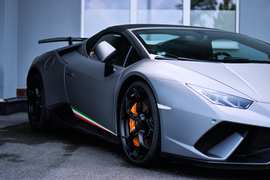
A car with 300 HP changes your relationship with traffic. Not because you’re always driving faster, but because you could. Suddenly, between 60 and 100 km/h, there’s a brief, almost casual moment. Overtaking becomes routine. Accelerating is a gesture.
In everyday life, it looks like this: less planning, more reaction. Less waiting in critical situations. A feeling of confidence, even with a full load. This power reserve can be relaxing or provoking. It depends less on the car than on the person behind it.
Because the downside is real: more weight, higher consumption, fewer opportunities to truly exploit the potential. The power is there, but rarely necessary.
Sporty Models with Over 250 HP
What This Means for You: A car with 300 HP or more is often seen as a luxury or a performance statement. However, in the age of traffic and speed limits, the utility of such power is limited.
Cost Breakdown:
Premium Pricing: These vehicles command a significant price premium, both for the car itself and for the associated technology and engineering.
High Maintenance Costs: Higher horsepower often correlates with higher performance tires, specialized brakes, and more complex engine systems, all of which increase maintenance costs.
Insurance: Insurance premiums are substantially higher for powerful vehicles due to the increased risk of accidents and the higher cost of repairs.
Mistakes to Avoid That Could Cost You Money
The “More Power” Trap: Many drivers fall into the trap of buying more horsepower than they need, believing it provides a better driving experience. In reality, it often leads to wasted money on fuel and insurance.
Consider the ROI: Does the added cost of higher horsepower translate to a significant improvement in your daily driving experience? If the answer is no, you are better off saving that money for other financial priorities.
The Real Difference Lies Not in the Extreme, but in the Feeling
In heavy traffic, on limited roads, under changing conditions, it’s not weak versus strong, but tense versus relaxed. One car demands attention. The other relieves it.
One works when you think ahead. The other works even when you’re tired. And it’s here that two completely different ways of driving a car emerge.
Two Ways to Experience Everyday Life

Some people want a car that is reliable, responds predictably, and doesn’t take up more space than necessary. For them, power is something that must be present but