

Why the Top Test Winner Often Isn’t the Best Car
Wednesday, 28 January 2026 News
Buying a car often starts with numbers and tests – but it ends in everyday life. Find out why more and more buyers realize that a test winner isn’t automatically the best choice, and why comparisons play a different role today than they did in the past.
Why the Top Test Winner Often Isn’t the Best Car
The Misleading Clarity of Best-of Lists
Today, when someone wants to buy a car, they quickly encounter a simple but misleading question: Which model is the best? Tests, rankings, and score sheets seem to provide clear answers. However, the closer the decision comes, the more often it becomes apparent that this clarity is hardly helpful in everyday life.
This is because buying a car is rarely a purely technical matter. It involves daily routines, habits, space requirements, costs – and the feeling of making the right decision. A car that shines in a test can still disappoint in everyday life. Conversely, a model that doesn’t top any best-of lists can sometimes fit surprisingly well with one’s own lifestyle.
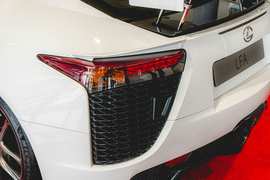
This is exactly why many buyers’ perspectives are changing. Instead of searching for the one \”right\” car, comparisons come to the forefront: two models, two concepts, two compromises. The question is increasingly not \”Which car is better?\” but \”Which one suits me better?\”.
8E769317-06B8-4001-8DFD-5317F0DA3714
Why Buying a Car is More About Daily Life Than Numbers
In reality, a purchasing decision rarely goes the way traditional test charts suggest. Today, when someone is looking for a car, they don’t just compare engine performance or trunk space; they try to anticipate future everyday situations. Does the car fit into the morning commute? Will there be enough space when life changes? And will the decision still feel right even after a few months?
Many of these questions cannot be answered with points. They arise from usage, experience, and context. Low fuel consumption is relevant—but only if it matches the driving profile. A large trunk is helpful—but only if it’s actually usable in everyday life. This is exactly where the gap between testing and reality begins.
When Objectively Right Suddenly Seems Wrong
At this point, best-in-test vehicles often reach their limits. A car can score excellently in objective categories and yet still be the wrong choice for a specific buyer. A sports-tuned SUV may impress on paper but feel cumbersome in city traffic. A particularly efficient engine might have advantages on short trips but force compromises on long journeys.
These contradictions rarely appear in rankings—but they emerge quickly in everyday life. What is considered a strength in tests can become a weakness in daily use. Conversely, features that aren’t at the top of any best-of list often prove crucial for satisfaction.
A Market Full of Options—and Uncertainty\n\n\n\n\n\n\n\n\n\n”
“\”\\n\\n\\n\\n\\n\\n\\n\\n\\n\\n\\n\\n\\n\\n\\n\\n\\n\\n\\n\\n\\n\\n\\n\\n\\n\\n\\n\\n\\n\\n\\n\\n\\n\\n\\n\\n\\n\\n\\n\\n\\n\\n\\n\\n\\n\\n\\n\\n\\n\\n\\n\\n\\n\\n\\n\\n\\n\\n\\n\\n\\n\\n\\n\\n\\n\\n\\n\\n\\n\\n\\n\\n\\n\\n\\n\\n\\n\\n\\n\\n\\n\\n\\n\\n\\n\\n\\n\\n\\n\\n\\n\\n\\n\\n\\n\\n\\n\\n\\n\\n\\n\\n\\n\\n\\n\\n\\n\\n\\n\\n\\n\\n\\n\\n\\n\\n\\n\\n\\n\\n\\n\\n\\n\\n\\n\\n\\n\\n\\n\\n\\n\\n\\n\\n\\n\\n\\n\\n\\n\\n\\n\\n\\n\\n\\n\\n\\n\\n\\n\\n\\n\\n\\n\\n\\n\\n\\n\\n\\n\\n\\n\\n\\n\\n\\n\\n\\n\\n\\n\\n\\n\\n\\n\\n\\n\\n\\n\\n\\n\\n\\n\\n\\n\\n\\n\\n\\n\\n\\n\\n\\n\\n\\n\\n\\n\\n\\n\\n\\n\\n\\n\\n\\n\\n\\n\\n\\n\\n\\n\\n\\n\\n\\n\\n\\n\\n\\n\\n\\n\\n\\n\\n\\n\\n\\n\\n\\n\\n\\n\\n\\n\\n\\n\\n\\n\\n\\n\\n\\n\\n\\n\\n\\n\\n\\n\\n\\n\\n\\n\\n\\n\\n\\n\\n\\n\\n\\n\\n\\n\\n\\n\\n\\n\\n\\n\\n\\n\\n\\n\\n\\n\\n\\n\\n\\n\\n\\n\\n\\n\\n\\n\\n\\n\\n\\n\\n\\n\\n\\n\\n\\n\\n\\n\\n\\n\\n\\n\\n\\n\\n\\n\\n\\n\\n\\n\\n\\n\\n\\n\\n\\n\\n\\n\\n\\n\\n\\n\\n\\n\\n\\n\\n\\n\\n\\n\\n\\n\\n\\n\\n\\n\\n\\n\\n\\n\\n\\n\\n\\n\\n\\n\\n\\n\\n\\n\\n\\n\\n\\n\\n\\n\\n\\n\\n\\n\\n\\n\\n\\n\\n\\n\\n\\n\\n\\n\\n\\n\\n\\n\\n\\n\\n\\n\\n\\n\\n\\n\\n\\n\\n\\n\\n\\n\\n\\n\\n\\n\\n\\n\\n\\n\\n\\n\\n\\n\\n\\n\\n\\n\\n\\n\\n\\n\\n\\n\\n\\n\\n\\n\\n\\n\\n\\n\\n\\n\\n\\n\\n\\n\\n\\n\\n\\n\\n\\n\\n\\n\\n\\n\\n\\n\\n\\n\\n\\n\\n\\n\\n\\n\\n\\n\\n\\n\\n\\n\\n\\n\\n\\n\\n\\n\\n\\n\\n\\n\\n\\n\\n\\n\\n\\n\\n\\n\\n\\n\\n\\n\\n\\n\\n\\n\\n\\n\\n\\n\\n\\n\\n\\n\\n\\n\\n\\n\\n\\n\\n\\n\\n\\n\\n\\n\\n\\n\\n\\n\\n\\n\\n\\n\\n\\n\\n\\n\\n\\n\\n\\n\\n\\n\\n\\n\\n\\n\\n\\n\\n\\n\\n\\n\\n\\n\\n\\n\\n\\n\\n\\n\\n\\n\\n\\n\\n\\n\\n\\n\\n\\n\\n\\n\\n\\n\\n\\n\\n\\n\\n\\n\\n\\n\\n\\n\\n\\n\\n\\n\\n\\n\\n\\n\\n\\n\\n\\n\\n\\n\\n\\n\\n\\n\\n\\n\\n\\n\\n\\n\\n\\n\\n\\n\\n\\n\\n\\n\\n\\n\\n\\n\\n\\n\\n\\n\\n\\n\\n\\n\\n\\n\\n\\n\\n\\n\\n\\n\\n\\n\\n\\n\\n\\n\\n\\n\\n\\n\\n\\n\\n\\n\\n\\n\\n\\n\\n\\n\\n\\n\\n\\n\\n\\n\\n\\n\\n\\n\\n\\n\\n\\n\\n\\n\\n\\n\\n\\n\\n\\n\\n\\n\\n\\n\\n\\n\\n\\n\\n\\n\\n\\n\\n\\n\\n\\n\\n\\n\\n\\n\\n\\n\\n\\n\\n\\n\\n\\n\\n\\n\\n\\n\\n\\n\\n\\n\\n\\n\\n\\n\\n\\n\\n\\n\\n\\n\\n\\n\\n\\n\\n\\n\\n\\